
Introduction
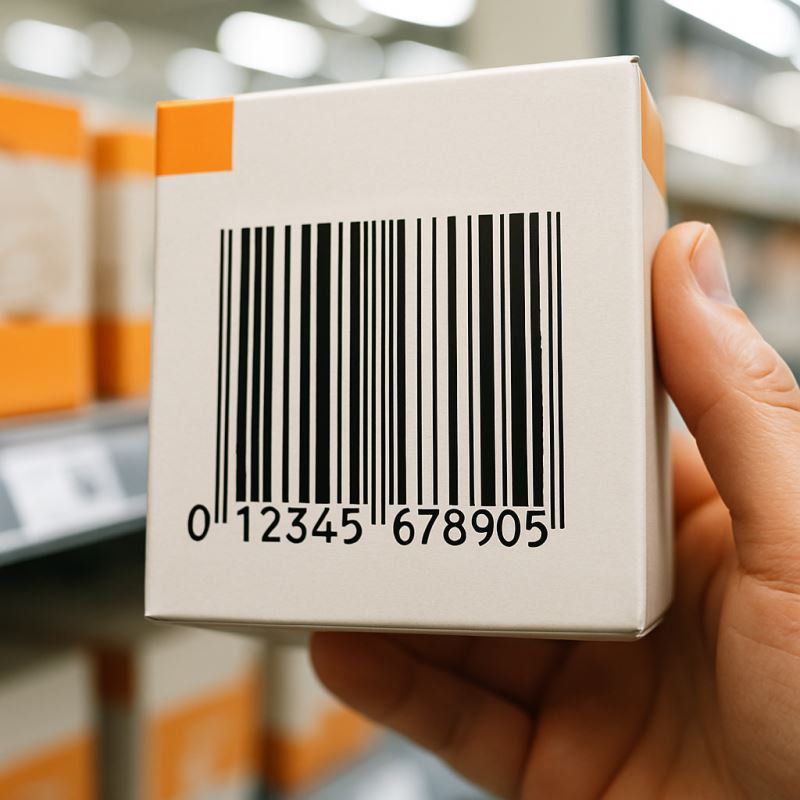
What do a box of cereal, a vaccine vial, and a pair of sneakers have in common?
They all use GS1 identifiers.
GS1 is the global language of traceability. Behind every barcode is a structured system designed to make products uniquely identifiable, anywhere in the world. In an increasingly interconnected supply chain, GS1 standards are non-negotiable for traceability.
Breaking Down the Core GS1 Standards
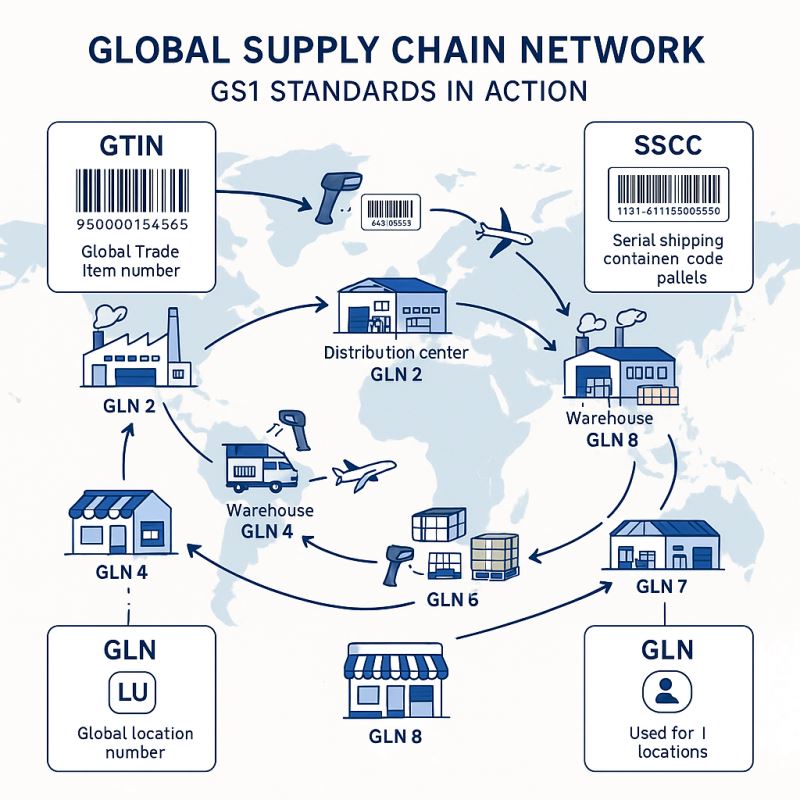
- GTIN (Global Trade Item Number) – Uniquely identifies products and packages
- GLN (Global Location Number) – Identifies the origin or destination (like factories or stores)
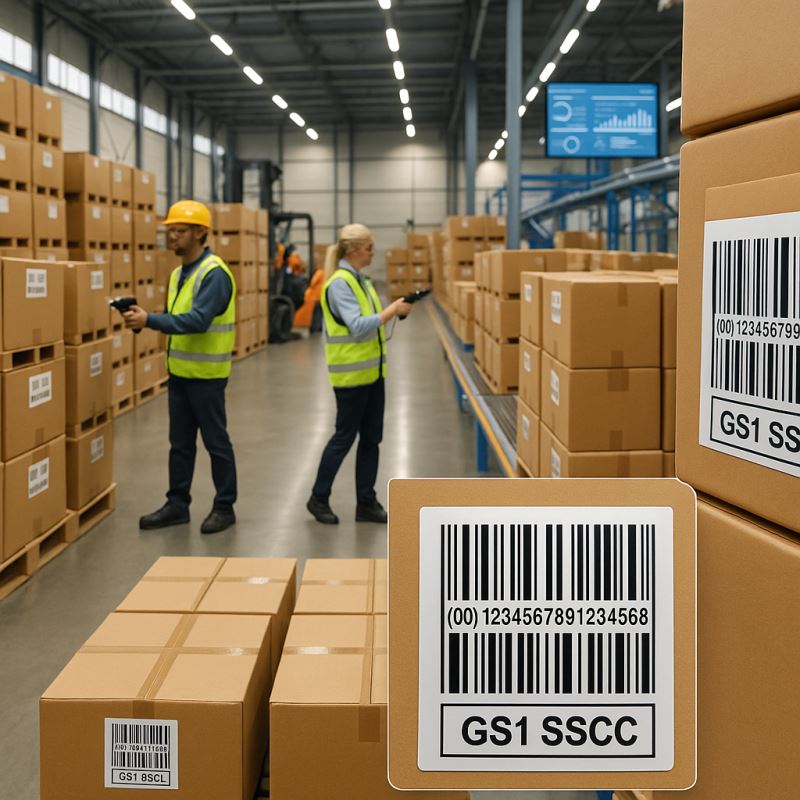
- SSCC (Serial Shipping Container Code) – Tracks logistic units like pallets or cartons
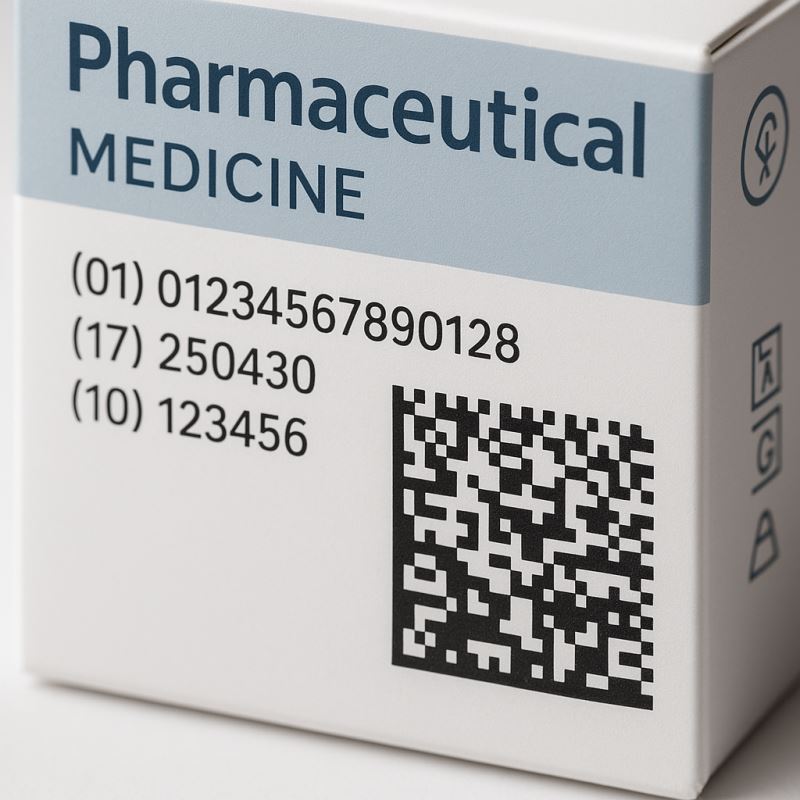
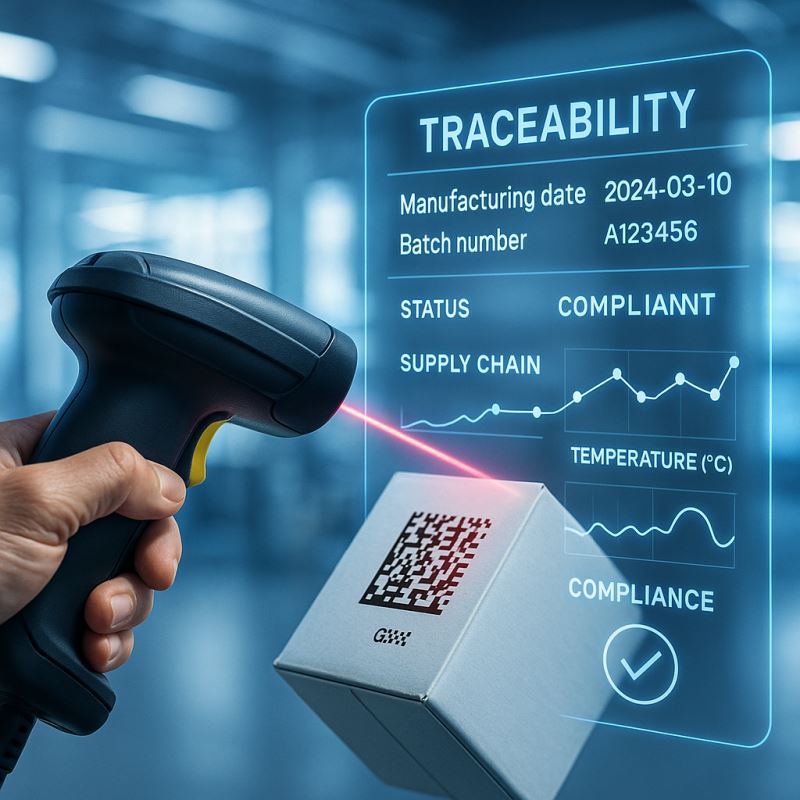
- GS1 DataMatrix – A 2D barcode used widely in pharma and food packaging
Each of these codes is globally unique, structured, and machine-readable.
 GS1 Powers Global Interoperability
From Europe to Asia, GS1 standards allow: – Seamless data exchange between trading partners – Unified recall mechanisms – Better visibility across multi-tier supply chains
Without GS1, traceability becomes fragmented and local. With GS1, it becomes universal.
 Industry Applications
- Pharma: GS1 DataMatrix ensures patient safety by enabling drug serialization and traceability per DSCSA/EU FMD
- Food & Beverage: GTINs and SSCCs help manage expiry tracking and cold chain logistics
- Apparel: GTINs and GLNs optimize inventory across global warehouses and retailers
- Logistics: SSCCs streamline inbound/outbound processes and ensure carton-level traceability
 Strategic Value of GS1 Adoption
Adopting GS1 standards isn’t just about compliance. It’s about: – Scaling globally – Building digital supply chain infrastructure – Preparing for regulations like EU DPP, FDA FSMA, etc. – Enabling end-to-end visibility for internal and external stakeholders
Conclusion
If traceability is the goal, GS1 is the roadmap.
Every scan, every code, every product journey begins with structured identification.
Global traceability starts with GS1.