
Introduction
Barcodes have been the backbone of supply chain management for decades. But in today’s connected, consumer-driven world, they’re no longer enough. Enter smart packaging—a game-changing innovation that’s making traceability smarter, deeper, and more interactive.
Smart packaging enables products to communicate—offering data about origin, quality, safety, and authenticity with a simple scan. It’s transforming compliance, logistics, and the way consumers trust what they buy.
From Barcode to Connected Package
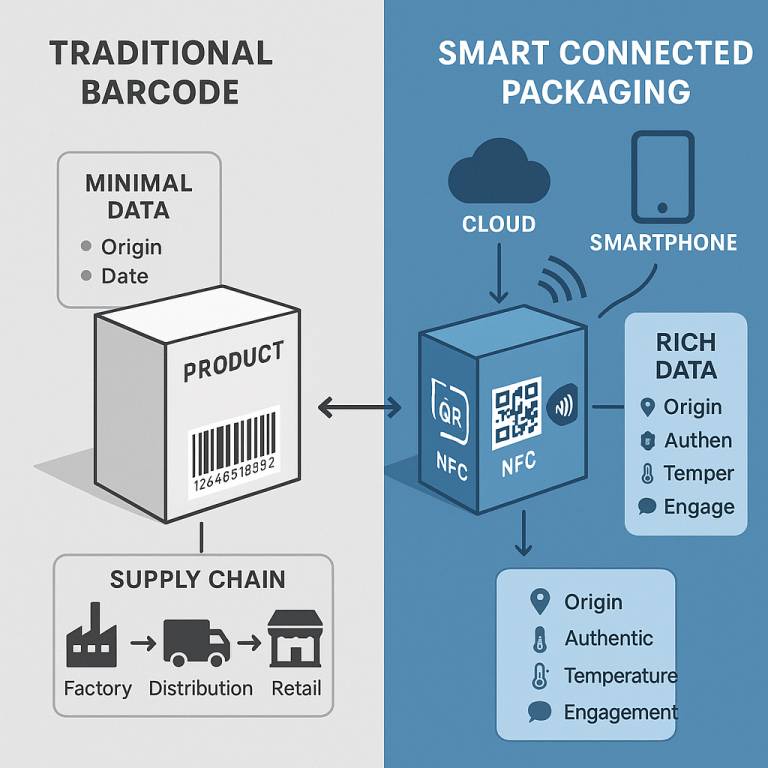
Barcodes are static. They can tell you what the product is, but not where it’s been, how it was handled, or whether it’s genuine.
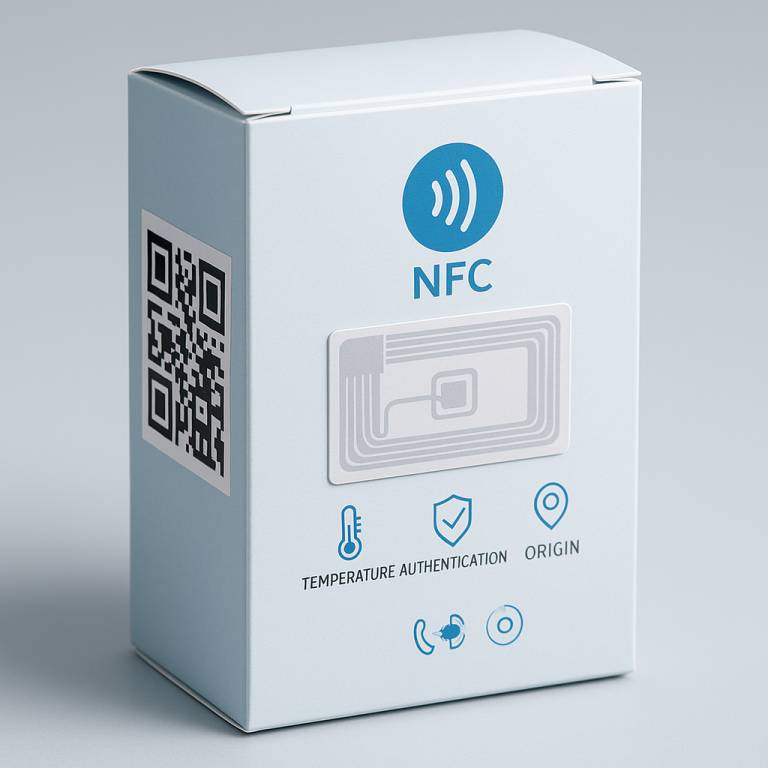
Smart packaging technologies—QR codes, RFID, NFC, and IoT sensors—are dynamic. They capture and transmit real-time data about the product, offering traceability from manufacturing to consumption.
Key Technologies Powering Smart Traceability
QR Codes Most widely adopted today, QR codes can store dynamic URLs, batch numbers, expiry dates, and more. They’re cost-effective and consumer-friendly—easily scanned by any smartphone.
NFC Tags Near Field Communication (NFC) offers encrypted authentication and deeper traceability. NFC tags are ideal for high-value or sensitive products like pharmaceuticals or luxury items.
RFID Labels RFID enables bulk scanning without line-of-sight. It’s powerful in warehouses, for tracking inventory and reducing human error.
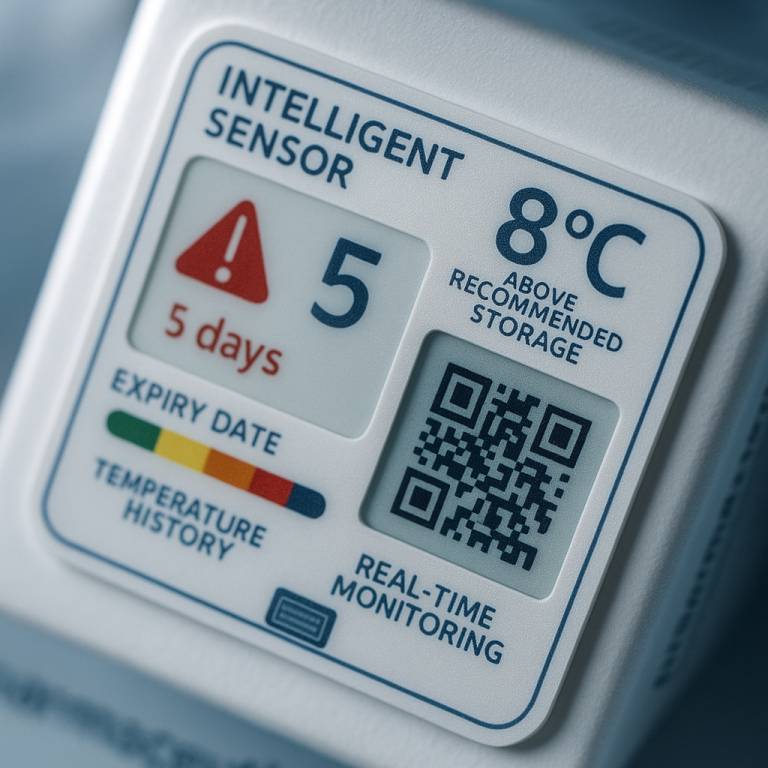
Embedded Sensors Temperature, humidity, shock, and time sensors monitor product integrity in real time. Perfect for cold chain logistics and perishable goods.
 Why Smart Packaging is a Game-Changer
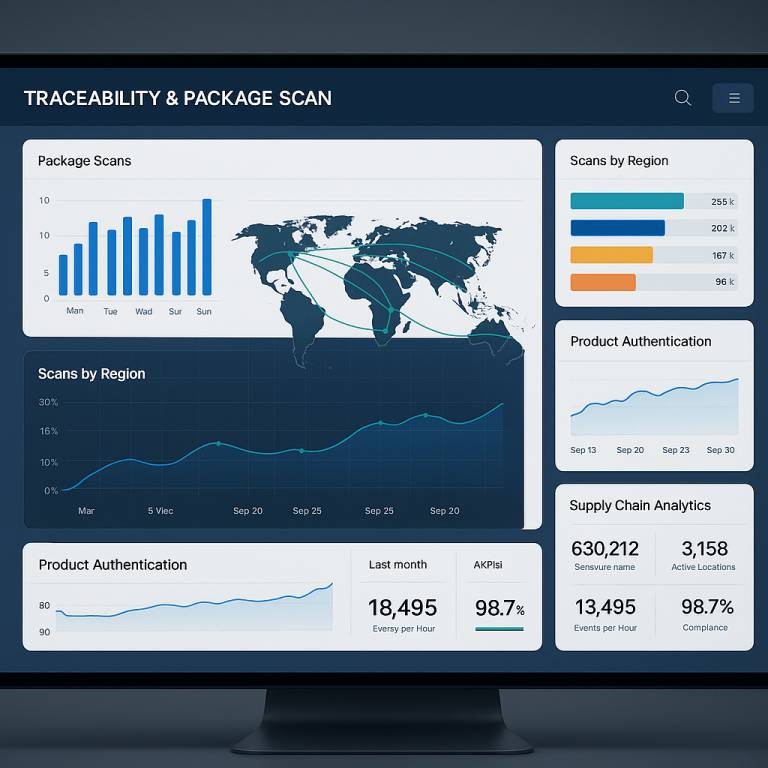
- Real-Time Traceability Know where your product is, how it’s handled, and if it’s been tampered with—at every stage.
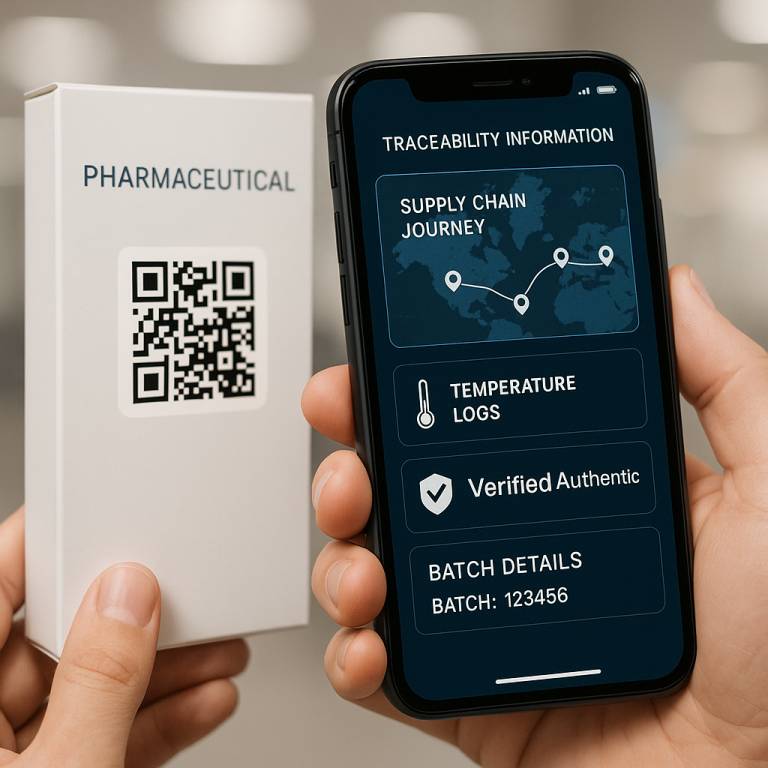
- Consumer Trust & Engagement Let customers scan the product to see where it came from, who made it, and when it was packaged. Share videos, certifications, or farm-to-fork stories.
- Anti-Counterfeiting & Authentication Serialization + scan-based verification = instant authenticity check. Helps fight the growing problem of fake products.
- Compliance Made Easier With evolving global regulations, especially in pharma (DSCSA, EU FMD) and food (FSMA), smart packaging automates record-keeping and regulatory traceability.
 Real-World Examples
- Nestlé uses QR codes on packaging in China to show ingredient sourcing, allergen info, and sustainability metrics.
- Pfizer embeds NFC tags in specialty drugs to verify cold chain compliance and batch integrity.
- Danone uses connected packaging to allow consumers to view production videos and farm data via mobile scan.
 Strategic Takeaways
- Start simple: QR codes offer massive ROI with minimal investment.
- Go deeper for sensitive goods: NFC + blockchain + sensors = airtight traceability.
- Integrate marketing: Use packaging as a channel to tell your sustainability or sourcing story.
- Plan for the future: Digital Product Passports (DPP) and eco-labeling will demand smart packaging adoption.
Conclusion
Smart packaging is the new frontier in traceability—bridging the gap between product, producer, and consumer. For brands looking to build trust, prevent fraud, and stay compliant in a transparent world, the packaging is no longer just a wrapper—it’s a data gateway.
If you’re still relying on static barcodes, you’re missing the real story your product could be telling.