


Introduction
For automotive leaders, there’s no margin for error. Precision manufacturing demands total visibility—from raw materials to final assembly. Traceability is the digital link that makes this possible.
The Challenge of Complexity
With thousands of components from global suppliers, automakers face immense risk if they can’t trace every part’s journey. One faulty airbag or engine part can spark recalls that damage brands and bottom lines.

How Traceability Delivers Precision
Component-Level Data
Using barcodes, RFID, and QR codes, automakers track everything: source, lot, and assembly. This data is a lifeline when issues arise.
Compliance with ISO/TS 16949
The ISO/TS 16949 standard requires rigorous tracking and defect resolution. Traceability systems deliver verifiable data trails for audits.
Recall Readiness
If recalls happen, digital tracking ensures rapid, precise targeting—saving money and protecting consumers.
Better Warranty Service
Traceability also powers warranty claims and repairs, building trust and loyalty.
 Case Studies: Industry Impact
Toyota: Digital part scans improve recall speed and root-cause identification.
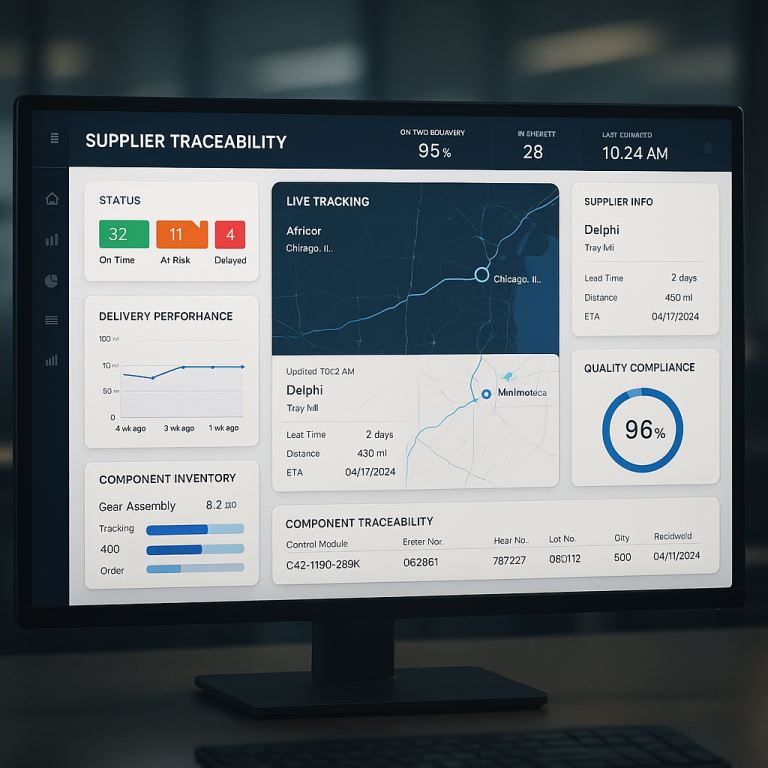
Volkswagen: Uses supplier dashboards for real-time part quality data.
Ford: Warranty claims tied directly to component traceability.
 Strategic Takeaways
Start with safety-critical parts—then expand.
Leverage supplier dashboards for accountability and data sharing.
Use traceability insights to improve future designs and manufacturing.
Conclusion
Traceability isn’t just compliance—it’s how automakers deliver on their promise of quality and safety. In a competitive global market, it’s a strategic edge no automotive brand can afford to ignore.